

One of the places we visited on my Uganda photography tour was Queen Elizabeth National Park. Although Uganda is not a typical game drive country like Kenya or Tanzania, we had a lovely time exploring the park in our Land Cruisers. Animal sightings were not as plentiful as I had hoped – it was dry season, and most animals were hugging the water sources. We did, however, encounter tree-climbing lions: a family of three, resting in an Euphorbia candelabra. But what I was most looking forward to was the Kazinga Channel boat cruise. When I was in Uganda for the first time, this was one of the most memorable experiences of the entire trip. So our small group of six boarded a boat, and off we went. Here are the photos from our boat ride, along with some commentary and photography tips.


Queen Elizabeth National Park & the Kazinga Channel
Queen Elizabeth National Park has a name that sounds grand – and it lives up to it. Originally established as Kazinga National Park in 1952, it was renamed two years later to mark a royal visit by Queen Elizabeth II. Today it protects over 95 mammal species and more than 600 bird species, making it one of the most biodiverse parks on the continent. It is also part of a UNESCO Biosphere Reserve.
At the heart of the park lies the Kazinga Channel – a 32-kilometre natural waterway connecting Lake George to the much larger Lake Edward. Both lakes carry royal names too: Lake Edward after King Edward VII, and Lake George after his successor, King George V. The channel is not a river; it has no significant current of its own. It simply connects two great lakes and, in doing so, creates one of the finest wildlife corridors in Africa. It is home to one of the world’s largest concentrations of hippos, along with Nile crocodiles, elephants, buffaloes, and over 100 species of water birds – including the spectacular African Skimmer. Eleven fishing villages are scattered along its shores, and the coexistence of people and wildlife here is something genuinely unique.
The Kazinga Channel Boat Cruise
We hired a 12-seater private boat for our cruise on the channel. This gave us plenty of room to move around – and crucially, to switch sides for better photography angles. Our guide Ivan arranged the boat from the Mweya Peninsula, at the southwestern end of the channel near Lake Edward. This turned out to be an excellent starting point, as the wildlife along those shores proved to be both abundant and diverse.
Before we cast off, I gave my group the usual briefing: check your camera settings, memory cards, and batteries. We’re shooting from a moving boat, so set your autofocus to continuous, use fast shutter speeds, and keep your horizon level. And yes – take some phone shots and videos for family and friends. But also, put your camera down from time to time. Soak it all in.
At first, we wanted to stop for every bird we spotted in the distance. Our captain knew better. He pushed on, steering us farther along the channel towards Kazinga village. And that’s where time stopped.
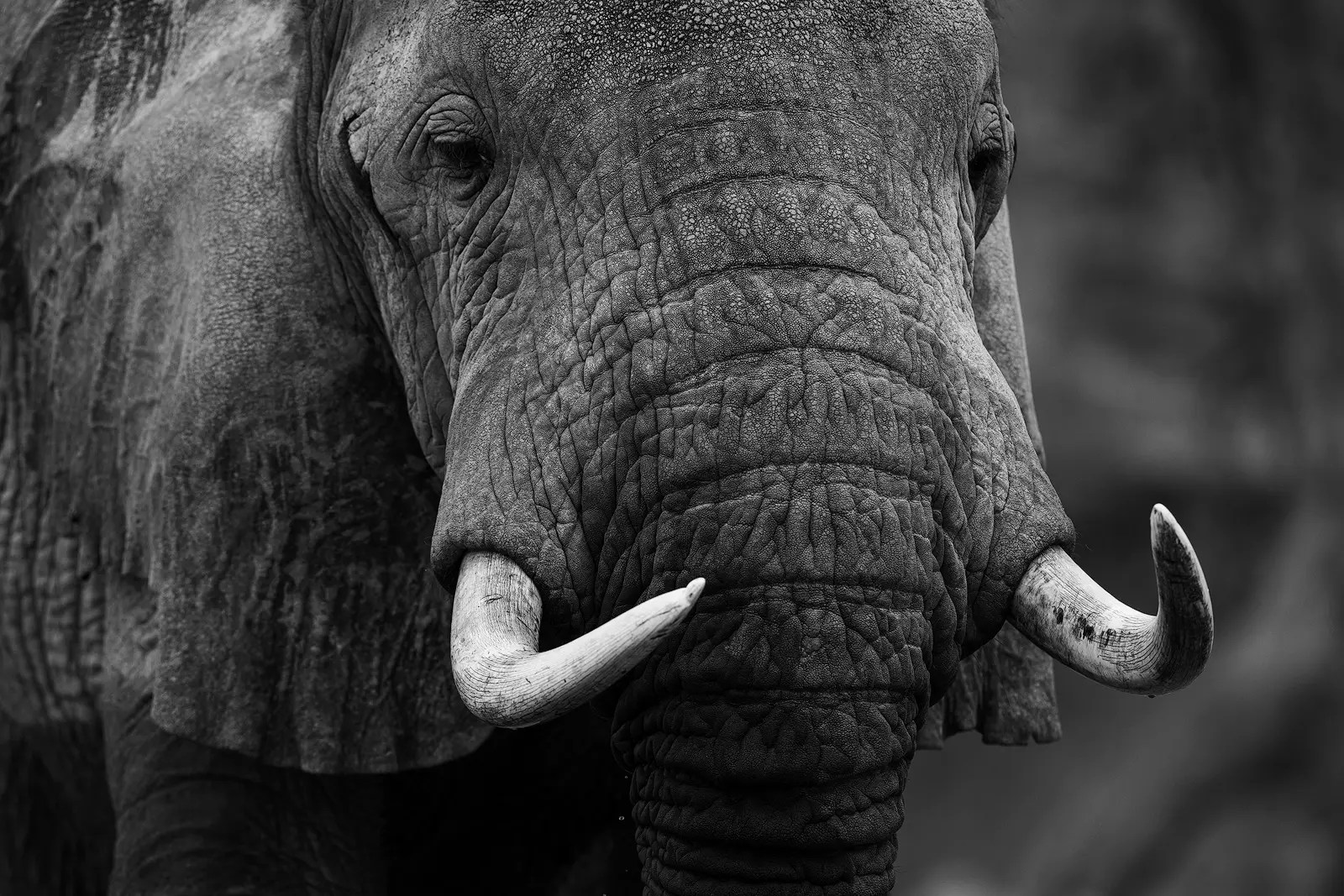
A family of hippos was resting along the shore, with two calves play-fighting, biting at the adults’ tails. A family of warthogs trotted down to the water’s edge to drink. Then, without warning, a massive elephant bull appeared and calmly walked in, scattering the hippos without a second glance. Meanwhile, villagers on the shore watched the whole scene unfold, photographing the animals with their phones. We were doing the same from the boat. We were all tourists here.
As we moved on, we passed Kazinga village itself – fishing boats lined up along the shore, the quiet rhythm of daily life playing out alongside buffalo and elephant. I was struck by how naturally enormous animals and local people shared this landscape, completely unfazed by each other. It felt like the most normal thing in the world.
The best was still ahead. Past the village, a large herd of elephants came into view. We approached slowly. What unfolded over the next stretch of shore was nothing short of extraordinary: elephants, hippos, and warthogs all sharing the water’s edge with dozens upon dozens of birds. Cormorants, yellow-billed storks, marabou storks, various herons and egrets, Egyptian geese, gulls, waders – in one single photograph, I counted more than 14 different species.
There was simply too much happening. At some point, I made a deliberate choice to slow down, lower the camera, and observe. It was far more rewarding. I watched the elephants interact with each other and noted how every other animal gave them a wide berth without being asked. I watched the different bird species go about their business – each with its own character, its own pace. And then an oversized hippo, already the biggest thing around, got unceremoniously pushed out of the way by an even larger elephant tusker who simply decided that patch of shore was his now.
Towards the end, most of us had set down our cameras. We were drinking Nile Special, watching, and sharing the kind of easy conversation that only happens when you’ve just collectively witnessed something wonderful.
On the way back, one final surprise: a large colony of African Skimmers appeared out of nowhere, circling the boat, skimming the surface of the channel in long, graceful passes before landing back on the shore – then repeating it all again. We raised our cameras one more time. Memory cards were full by the time we docked.
Kazinga Channel Boat Cruise – Photos




Final Thoughts
Kazinga Channel was, once again, the undisputed highlight of our time in Queen Elizabeth National Park – and honestly, of the entire Uganda trip.
If you are planning to visit, here is my honest advice: do not take the large public double-decker boat. It’s fine for a casual outing, but it limits your flexibility considerably. Paying a little extra for a smaller private vessel – where the captain can slow down, make stops, and edge closer to the shore – is absolutely worth it. The difference in your photography and your overall experience is night and day.
The best sections of the channel for wildlife, in my experience, are around the Kazinga village area and beyond – so don’t give up too soon if the first stretch feels quiet.
Check my other Uganda posts and consider joining my next Uganda photography tour if this kind of experience speaks to you. Thank you for reading!


